

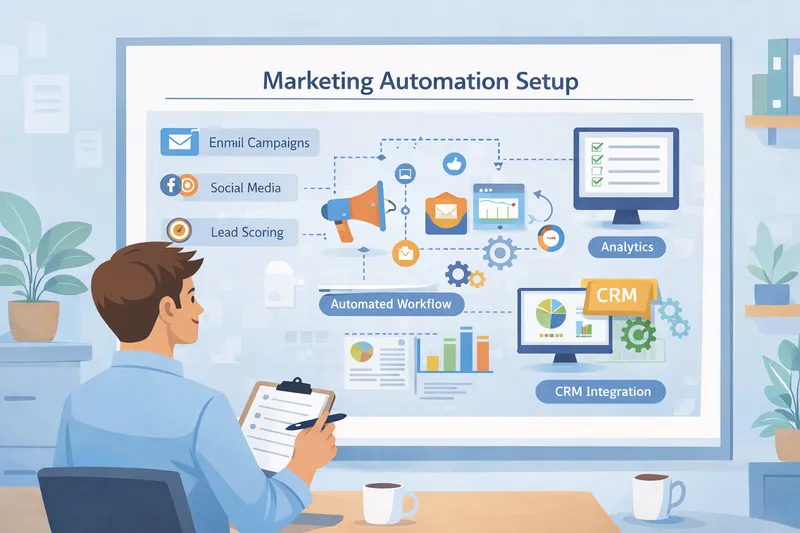
Introduction - Digital Marketing Automation
A proper marketing automation setup helps businesses manage communication, lead nurturing, and follow-ups without constant manual effort. As customer journeys become more complex, automation ensures consistency and efficiency across every touchpoint.
When implemented correctly, marketing automation setup improves response time, strengthens engagement, and increases conversion opportunities while reducing operational workload.
Marketing Automation Introduction: Build Systems That Scale
When Ravi started getting 20 leads per day, he felt excited.
Then he felt overwhelmed.
He manually replied to emails. He forgot follow-ups. He missed calls.
Leads slowed down again.
The problem was not marketing.
It was lack of system.
This is where marketing automation becomes essential.
What Is Marketing Automation?
Marketing automation uses software to automatically send messages, track behavior, and move leads through your funnel without manual effort.
It does not remove the human touch.
It organizes it.
Automation helps you:
- Send welcome emails instantly
- Follow up automatically
- Segment audience
- Score leads
- Trigger offers based on behavior
- Schedule social posts
- Nurture cold prospects
For small businesses and startups, automation saves time and increases consistency.
Why Automation Strengthens Your Digital Marketing Foundation
Without automation:
- Leads go cold
- Follow-ups get delayed
- Messages become inconsistent
- Sales opportunities are missed
With automation:
- Every lead receives attention
- Communication stays timely
- Sales process becomes predictable
- Growth becomes scalable
Consistency builds trust.
Trust builds revenue.
Key Areas to Automate
Let’s focus on practical automation areas for small businesses.
Email Sequences
Set up:
- Welcome email series
- Lead nurturing sequence
- Webinar reminder emails
- Abandoned cart emails
- Post-purchase follow-up
Example:
- Day 1: Welcome email
- Day 3: Educational content
- Day 5: Case study
- Day 7: Offer
This moves leads through your sales funnel automatically.
Lead Scoring
Assign points based on user actions:
- Opened email → +5
- Clicked link → +10
- Visited pricing page → +20
High score means high intent.
Your sales team can focus on warm leads first.
Behavior-Based Triggers
If someone:
- Downloads a guide → send related content
- Clicks pricing → send offer email
- Abandons cart → send reminder
Automation reacts to behavior.
This increases conversions significantly.
CRM Integration
Customer Relationship Management (CRM) systems help you:
- Track conversations
- Manage pipeline
- Assign tasks
- Monitor deals
When connected with automation tools, your process becomes smooth.
Simple Automation Setup for Startups
You do not need complex systems.
Start with:
- Email marketing tool
- Basic CRM
- Landing page builder
- Analytics tracking
Step 1: Capture lead
Step 2: Send automated email
Step 3: Track clicks
Step 4: Send offer
Step 5: Notify sales if high intent
Simple. Effective.
Common Automation Mistakes
Avoid:
- Over-automating without personalization
- Sending too many emails
- Ignoring data
- Forgetting to test sequences
Automation must feel human.
Use:
- First name personalization
- Clear language
- Helpful content
Not robotic messages.
Automation + Funnel + Conversion
Marketing automation connects everything:
- Lead generation feeds into email
- Email nurtures funnel
- Funnel drives conversions
- Conversions generate revenue
Without automation, growth feels heavy.
With automation, growth feels organized.
Core Components of an Effective Automation System
A reliable marketing automation setup should include:
- CRM integration
- Email sequencing workflows
- Behavioral triggers
- Lead scoring models
- Audience segmentation
- Performance tracking dashboards
Each component works together to guide prospects through structured communication paths.
Automation Without Losing Personalization
One common concern is that automation may feel robotic. To maintain authenticity:
- Personalize subject lines and content
- Segment audiences accurately
- Trigger emails based on behavior
- Monitor engagement metrics
Smart automation enhances user experience rather than replacing human connection.
Conclusion
Businesses that invest in marketing automation setup create predictable growth systems. Automation supports faster response times, structured follow-up, and better resource allocation. When combined with analytics and segmentation, it strengthens long-term marketing performance.
References & Further Reading
The following resources provide structured insights on marketing automation systems, CRM integration, and workflow optimization for scalable business growth.
- HubSpot – Marketing Automation Guide — Comprehensive overview of automation workflows and lead nurturing systems.
- Mailchimp – Marketing Automation Resources — Practical guidance on automated campaigns and segmentation.
- Salesforce – What Is Marketing Automation? — Explanation of automation platforms and CRM integration benefits.
Frequently Asked Questions
What is marketing automation setup?
Marketing automation setup involves configuring systems that automate email campaigns, lead nurturing, customer tracking, and follow-ups based on user behavior and segmentation.
Why is marketing automation important for businesses?
It improves efficiency, ensures consistent communication, reduces manual workload, and increases conversion opportunities through structured workflows.
What tools are used for marketing automation?
Businesses typically use CRM platforms, email marketing software, workflow builders, and analytics dashboards to manage automation systems.
Can small businesses benefit from marketing automation?
Yes, even simple automation sequences can improve lead follow-up speed and customer engagement for small teams with limited resources.
How does marketing automation improve lead nurturing?
Automated sequences deliver relevant content at the right time, guiding prospects through the sales funnel based on their actions.
What is lead scoring in automation?
Lead scoring assigns values to user actions, helping prioritize high-intent prospects and improve sales efficiency.
Does automation replace human interaction?
No, automation supports communication but should be combined with personalized engagement when appropriate.
How often should automation workflows be reviewed?
Workflows should be reviewed monthly to ensure they align with performance metrics and evolving audience behavior.
What mistakes should be avoided in automation setup?
Avoid overcomplicating workflows, neglecting segmentation, ignoring analytics, and sending excessive automated messages.



Comments Section