

Introduction - Conversion Rate Optimization
Understanding conversion optimization basics is essential for turning traffic into measurable results. Attracting visitors is only part of the process; converting them into leads or customers determines profitability.
Conversion optimization focuses on improving user experience, messaging clarity, and decision pathways. When executed correctly, even small improvements can significantly increase revenue without increasing traffic.
Conversion Optimization Basics: Turn Traffic Into Revenue
Ravi increased his website traffic.
He started collecting leads.
But sales still felt inconsistent.
The problem was not traffic.
It was conversion.
Conversion optimization means improving the percentage of visitors who take action — whether that is:
- Filling a form
- Booking a call
- Buying a product
- Subscribing to email
If 1,000 people visit and only 10 buy, your conversion rate is 1%.
If you improve it to 3%, you triple revenue without increasing traffic.
That is powerful.
What Is Conversion Rate Optimization (CRO)?
Conversion Rate Optimization (CRO) is the process of testing and improving elements on your website or funnel to increase results.
It focuses on:
- User behavior
- Psychology
- Design clarity
- Messaging
- Trust signals
CRO strengthens your digital marketing foundation because it makes every traffic source more profitable.
Key Elements That Improve Conversions
Let’s break it into practical actions.
Clear Headlines
Your headline must answer one question:
“What will I gain?”
Weak headline: “Welcome to Our Website”
Strong headline: “Get 30 Qualified Leads Every Month With Proven Digital Marketing Systems”
Be specific.
Clarity converts better than creativity.
Strong Call-To-Action (CTA)
Your CTA must be:
- Clear
- Action-driven
- Visible
Avoid: “Submit”
Use: “Get Free Strategy Call” “Download Free Guide” “Start Free Trial”
Make it obvious.
Social Proof
People trust people.
Add:
- Testimonials
- Reviews
- Star ratings
- Client logos
- Case studies
For example:
“Helped 120+ small businesses increase online sales.”
Trust reduces hesitation.
Reduce Friction
Ask yourself:
- Is the form too long?
- Is checkout complicated?
- Are there too many distractions?
- Is page loading slow?
Even a 1-second delay can reduce conversions significantly.
Keep it simple.
Mobile Optimization
Many users browse on mobile.
Check:
- Button size
- Page speed
- Font readability
- Easy navigation
- Quick load time
If mobile experience is poor, conversions drop.
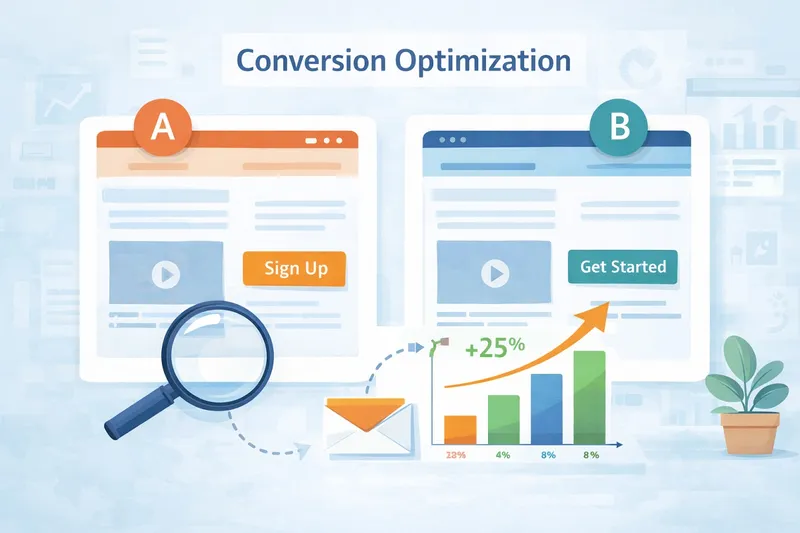
Use A/B Testing
Test variations like:
- Headline A vs Headline B
- Red button vs green button
- Long page vs short page
- Different pricing formats
Small changes often create big improvements.
Do not guess. Test.
Conversion Optimization Example
Imagine:
You run paid ads for “digital marketing services.”
Ad → Homepage
Conversion rate: 0.8%
Now you create:
Ad → Dedicated landing page → Clear offer → Testimonials → Strong CTA
Conversion rate: 3.2%
Same traffic. Four times more results.
That is CRO in action.
The Psychology Behind Conversions
People buy when:
- They trust you
- They understand the offer
- The risk feels low
- The value feels high
- The process feels easy
Your job is to remove doubt and increase clarity.
Conversion optimization connects directly with:
- Sales funnel
- Lead generation
- Paid marketing ROI
- Email marketing performance
Without it, your marketing leaks revenue.
With it, your digital marketing foundation becomes stronger and more profitable.
Core Elements That Influence Conversions
Strong conversion optimization basics include:
- Clear and benefit-driven headlines
- Strong call-to-action placement
- Fast-loading pages
- Mobile responsiveness
- Social proof and trust signals
- Simple form structure
Each of these factors directly impacts user confidence and decision-making.
Data-Driven Testing and Improvement
Optimization requires evidence rather than assumptions.
Important testing methods include:
- A/B testing headlines and layouts
- Heatmap analysis
- User behavior tracking
- Funnel drop-off analysis
Consistent testing strengthens long-term performance and reduces guesswork.
Conclusion
Traffic alone does not guarantee growth. Applying conversion optimization basics ensures that visitors take meaningful action. Businesses that continuously test and refine their pages achieve higher return on investment and stronger long-term performance.
References & Further Reading
The following resources provide expert guidance on improving website conversion rates, user experience optimization, and data-driven testing strategies.
- Neil Patel – Conversion Rate Optimization Guide — Practical insights on improving landing pages and testing strategies.
- WordStream – Conversion Optimization Basics — Foundational explanation of improving website performance.
- HubSpot – CRO Strategies — Comprehensive guide to conversion improvement frameworks.
Frequently Asked Questions
What are conversion optimization basics?
Conversion optimization basics refer to improving website elements such as headlines, calls-to-action, layout, and speed to increase the percentage of visitors who take action.
Why is conversion optimization important?
Without optimization, businesses may waste traffic and advertising budget. Improving conversion rates increases revenue without increasing marketing spend.
What is a good website conversion rate?
A good conversion rate varies by industry, but many businesses aim for two to five percent while continuously testing for improvement.
How does A/B testing support optimization?
A/B testing compares two variations of a page element to determine which performs better based on measurable user behavior data.
What role does page speed play in conversions?
Slow-loading pages increase bounce rates and reduce trust, directly impacting conversion rates and user satisfaction.
Can small businesses benefit from conversion optimization?
Yes, even minor improvements in layout or messaging can significantly increase results for small businesses with limited traffic.
How often should conversion optimization be performed?
Ongoing monthly testing and performance reviews help maintain steady improvement and adapt to user behavior changes.
What tools are used for conversion optimization?
Does conversion optimization improve SEO?
Improved user experience and engagement metrics can indirectly support search visibility and ranking performance.
What is the first step in conversion optimization?
The first step is analyzing current performance metrics to identify friction points and prioritize high-impact improvements.



Comments Section