

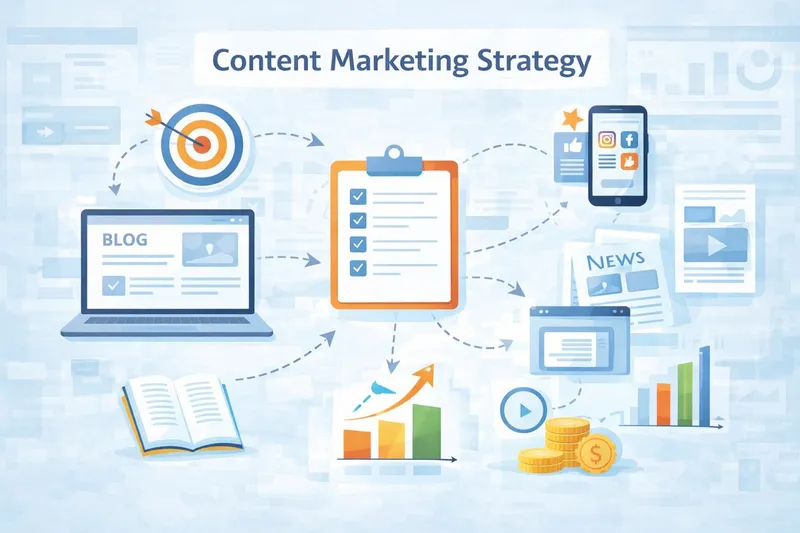
Introduction - Content Marketing Strategy
A strong content marketing strategy helps businesses attract qualified traffic, build authority, and guide prospects through the buying journey. Instead of direct promotion, it focuses on providing valuable, relevant information that addresses audience needs.
When structured properly, a content marketing strategy supports SEO, lead generation, brand trust, and long-term digital growth.
Content Marketing Strategy: Build Authority That Compounds
Ravi stopped chasing trends.
Instead, he started answering real questions his customers asked.
Traffic increased slowly at first.
Then it grew steadily.
Six months later, his blog brought consistent leads without daily effort.
That is the power of content marketing.
Content marketing means creating valuable, relevant content to attract and convert a clearly defined audience.
It is not about posting randomly.
It is about building trust at scale.
Why Content Marketing Is the Backbone of Digital Growth
Content marketing supports:
- SEO traffic
- Lead generation
- Email nurturing
- Social media growth
- Brand authority
- Sales enablement
It strengthens your entire digital marketing foundation.
Without content, your sales funnel has no fuel.
Types of Content That Drive Results
Small businesses should focus on practical formats:
Blog Posts
SEO-focused articles targeting:
- Beginner queries
- Comparison keywords
- Problem-solving searches
- Local intent keywords
Example:
“How to Choose a Digital Marketing Agency for Small Business”
Blog posts attract high-intent traffic from search engines.
Educational Videos
Short-form and long-form videos:
- Tutorials
- Explainers
- Behind-the-scenes
- Case studies
Video increases trust quickly.
Many buyers prefer watching before buying.
Case Studies
Real results convert better than promises.
Show:
- Client problem
- Your solution
- Measurable result
Case studies work best in the consideration and decision stages.
Social Media Content
Use social platforms to:
- Repurpose blog content
- Share quick tips
- Build community
- Drive traffic to website
But remember, social media should support your core assets — not replace them.
Pillar and Cluster Model (Important for SEO)
To rank well, structure your content properly.
Use:
- One main pillar article (like this one)
- Multiple supporting cluster articles
- Internal links connecting them
For example:
This pillar article connects to:
- What is Digital Marketing
- Creating a Digital Marketing Strategy
- Customer Persona Guide
- Sales Funnel Explained
- Organic vs Paid Marketing
- Lead Generation Methods
- Conversion Optimization Basics
- Marketing Automation Introduction
- Email Marketing Setup Guide
This structure signals authority to search engines.
It improves topical relevance and ranking potential.
How to Plan a Content Strategy
Follow this simple framework.
Step 1: Keyword Research
Identify:
- High search volume keywords
- Long-tail keywords
- Question-based keywords
- Commercial intent keywords
Focus on user intent, not just volume.
Step 2: Map Content to Funnel Stages
Top of Funnel: Educational blogs, guides, tutorials.
Middle of Funnel: Case studies, comparisons, webinars.
Bottom of Funnel: Service pages, pricing pages, testimonials.
Align content with buyer journey.
Step 3: Create a Publishing Calendar
Be consistent.
For example:
- 2 blog posts per month
- 3 social posts per week
- 1 email newsletter per week
- 1 video per week
Consistency builds momentum.
Step 4: Optimize for SEO and AEO
To rank well:
- Use clear headings
- Answer questions directly
- Add structured formatting
- Include internal links
- Use natural keyword placement
- Improve page speed
- Optimize for mobile
Also structure content to answer voice search and featured snippets.
This improves Answer Engine Optimization (AEO).
Content Marketing Example: Startup SaaS Company
A SaaS startup selling CRM software could create:
- “What is CRM?” beginner guide
- “Best CRM for Small Business” comparison
- “How to Improve Sales Tracking” tutorial
- Case study with real client
- Free CRM setup checklist
Each piece leads toward product signup.
That is strategy.
Measure Content Performance
Track:
- Organic traffic
- Keyword rankings
- Time on page
- Conversion rate
- Backlinks
- Email signups
Data shows which topics work.
Double down on what performs.
Content + Email + Funnel = Growth Engine
- Content attracts.
- Email nurtures.
- Funnel converts.
- Automation scales.
That is the digital marketing foundation in action.
Core Pillars of an Effective Content Plan
A results-focused content marketing strategy includes:
- Keyword research aligned with search intent
- Topic clusters and pillar pages
- Educational blog content
- Case studies and proof-based articles
- Lead magnets and gated resources
- Consistent publishing schedule
This structure improves search visibility and topical authority.
Aligning Content with the Sales Funnel
Not all content serves the same purpose. A complete strategy should cover:
- Awareness-stage educational articles
- Consideration-stage comparison guides
- Decision-stage solution-focused content
Mapping content to funnel stages improves conversion efficiency and user experience.
Conclusion
Content remains one of the most reliable long-term marketing investments. A well-planned content marketing strategy improves search rankings, builds trust, and generates qualified leads without relying solely on paid advertising.
References & Further Reading
The following resources provide structured insights on content planning, SEO strategy, and building authority through topic clusters.
- Content Marketing Institute – What Is Content Marketing? — Foundational principles and strategic planning insights.
- HubSpot – Content Marketing Guide — Frameworks for building structured content systems.
- Moz – Beginner’s Guide to SEO — SEO fundamentals that support content strategy success.
Frequently Asked Questions
What is a content marketing strategy?
It is a structured plan for creating and distributing valuable content to attract, engage, and convert a specific audience.
Why is content marketing important for SEO?
High-quality, keyword-optimized content improves search rankings and increases organic traffic.
How often should content be published?
Consistency matters more than frequency. A realistic and sustainable publishing schedule is recommended.
What are topic clusters?
Topic clusters are related articles grouped around a main pillar page to strengthen topical authority.
How does content support lead generation?
Educational articles and gated resources attract traffic and encourage users to share contact information.
What is search intent in content marketing?
Search intent refers to the purpose behind a user’s query, such as informational, navigational, or transactional.
Should content focus only on blog posts?
No, effective strategies include blogs, case studies, guides, videos, and downloadable resources.
How long does content marketing take to show results?
Organic growth usually requires several months of consistent publishing and optimization.
How do I measure content performance?
Track traffic, engagement, keyword rankings, conversion rates, and time on page.
Can small businesses benefit from content marketing?
Yes, structured content helps small businesses compete organically without large advertising budgets.



Comments Section